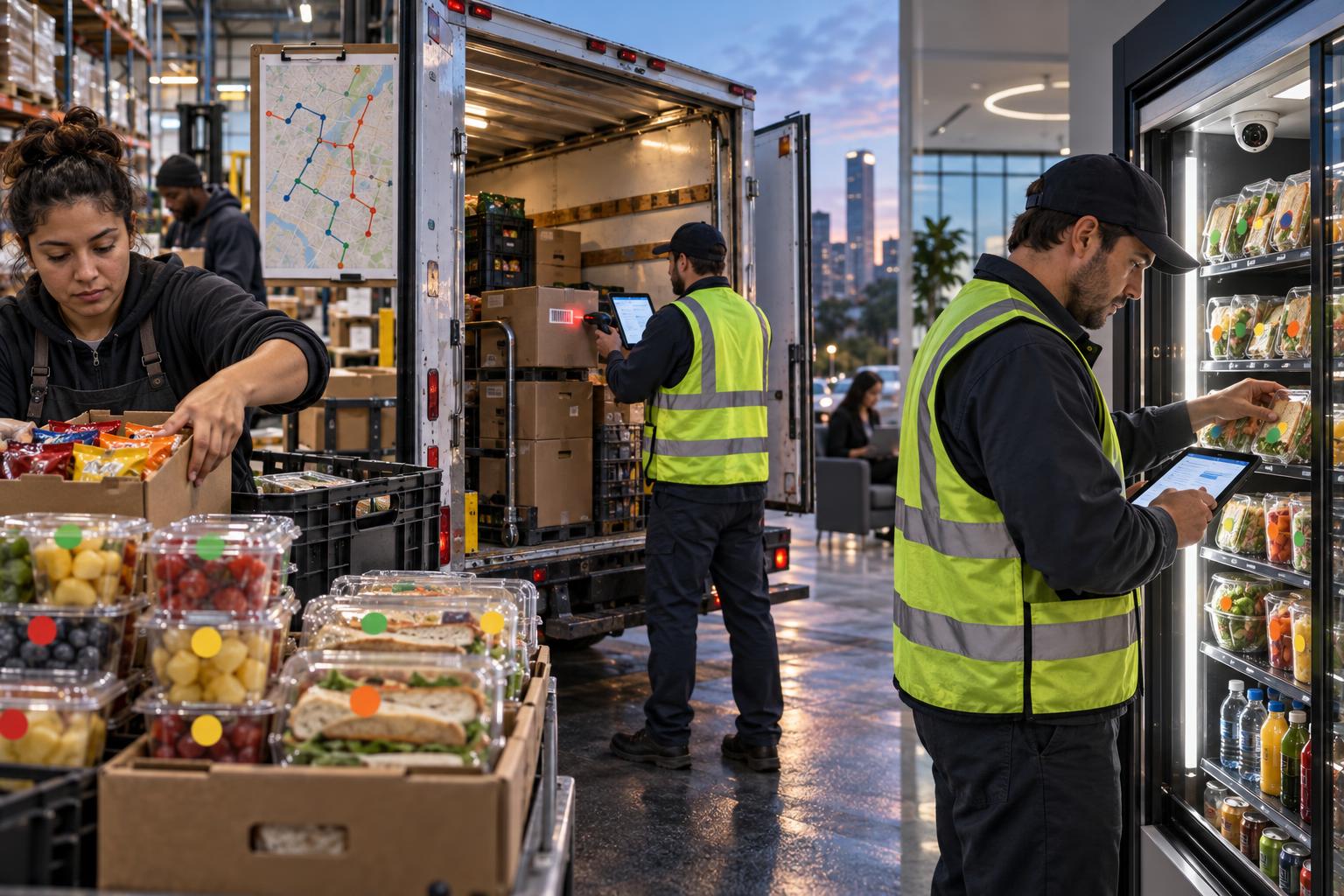
This spring, Automatic Merchandiser sent its annual survey to vending and micro market operators. The 2026 State of the Industry report came out in July. It puts convenience services revenue at an estimated $40.04 billion for 2025, up 18.3% from $33.85 billion.
Smart coolers get the headline. Four other findings are about the route: more locations, thin margins, shrink, and product with short dates. Each one changes the daily work of vending machine restock, and VendGogh has a screen for each.
More locations, same trucks
More than 65% of the operators in the survey reported revenue growth in 2025. More than 70% increased the number of locations that they serve.
Each new location is another stop on a route. Unless you hire, the same drivers and the same trucks cover it. Each added stop leaves less time to load by memory and fix a wrong guess later.
Build the load for each stop from what the machine sold since the last visit. When a machine has a problem, send the driver there first.
Thin margins
The report says that operators “continue to balance labor costs, product costs and thin margins.” On a route, two of those costs come from the load:
- A truck with the wrong product makes a second trip. That trip costs a driver’s hours and fuel.
- A case that expires on the warehouse shelf is product that you paid for and cannot sell.
A pick list prevents the second trip. A rule that sends the oldest stock out first keeps a case from expiring at the back of the shelf.
Shrink, and the audit at each visit
Nearly two-thirds of the operators reported shrink below 5%. Only 12.5% reported shrink above 10%. The most common deterrent was a camera connected to a monitoring service. The report also says that “regular inventory audits also remain an important tool.”
The driver already stands at each machine on each visit. If the driver counts the coils before the restock, every visit is an audit. A loss then shows up within one visit, and you know which machine it came from.
Count each machine before you restock it. When a unit leaves a coil without a sale, record why.
Better-for-you product has short dates
In the report’s better-for-you rankings, jerky (27%), protein bars (18%), and fresh food (18%) were 63% of the answers.
Jerky and protein bars have long shelf lives. Fresh food has a shelf life of days. A sandwich that expires in the coil is a loss, and a customer who finds it can complain to the location. Each fresh item that you add to a route is one more date to check.
Record the expiration date when a delivery arrives. Check the dates in the warehouse before you build the pick lists, and check the dates in each coil at each stop.
Do this today
- Count the stops on your busiest route this year and last year.
- Find the product with the shortest date in your warehouse. Write down when it expires.
- Count one machine before you restock it, and compare the count with your record.
- Write down the reason for each unit that you pull from a coil this week.
- Find the machine that loses the most sales when it stops. Write down how you would know that it stopped.
How VendGogh handles the route behind the report
- The load for each stop. The Pick List Summary on the Edit Inventory screen shows what each machine needs: the stock on hand, the fill to par, and the shortfall. Show Route Machines combines the pick lists of all the machines on a route.
- The truck. The warehouse prepares each route in three steps: Reserve, Pick, and Ready for Driver. The Pick step shows the aisle, row, and bay of each lot. The driver confirms the stock on the Receive Inventory screen, or selects Reject.
- The machine with a problem. VendGogh sorts open alerts by the sales at stake each week. A machine that stops reporting gets a “not reporting” verdict, as we explain in the silent machine.
- The oldest stock. At the Reserve step, VendGogh reserves the soonest-expiring lots first.
- Dates. Inventory → Lots records each delivery with its quantity, cost, expiration date, and warehouse location. The Freshness report lists stock near its date, in the coils and on the warehouse shelves.
- The audit at each visit. The Confirm step on the Service Machines screen shows what VendGogh expects in each coil. The driver corrects a count before the restock.
- The reason for each unit. In the coil, the driver marks pulled units as Discard Items, Give as Charity, or Return Items.
- Cash. Each DEX read tells VendGogh how much cash the machine holds. Cash Collections lists each machine with cash on hand, and Collect records the collection.
See how pick lists, the oldest-stock-first rule, and expiration tracking work together on the vending machine restock page.